Understanding Epoxy Flooring Basics
Epoxy flooring has gained significant popularity in both residential and commercial applications due to its remarkable durability and aesthetic appeal. At its core, epoxy flooring consists of a resin and a hardener that, when mixed together, create a rigid plastic material that is strong and resistant to degradation. This flooring solution is not only visually attractive but also provides a tough, long-lasting surface suitable for high-traffic areas.
For those considering epoxy flooring, ElevateEpoxyFlooring.com offers a comprehensive range of options, ensuring you find the perfect solution for your space.
What is Epoxy Flooring?
Epoxy flooring is a combination of resins and hardeners that form a durable, moisture-resistant surface. Commonly used in garages, basements, and commercial facilities, epoxy flooring is available in various styles and colors. The application process involves preparing the existing concrete floor, mixing the epoxy components, and then applying them to create a seamless, hard-wearing surface.
Benefits of Epoxy Flooring for Homes and Businesses
- Durability: Epoxy floors can withstand heavy foot traffic, making them ideal for commercial spaces.
- Easy Maintenance: Their smooth surface makes cleaning and upkeep simple, requiring just a mop and mild detergent.
- Aesthetic Appeal: Available in numerous colors and finishes, epoxy flooring can enhance any space's appearance.
- Cost-Effectiveness: With proper installation and care, epoxy flooring can last for many years, providing a good return on investment.
Common Misconceptions About Epoxy Flooring
Many people believe that epoxy flooring is only suitable for industrial settings; however, this is not the case. Homeowners increasingly recognize the benefits of epoxy and its versatility in various environments, including kitchens, living areas, and outdoor spaces. Another misconception is that epoxy floors are slippery. While they can be smooth, anti-slip additives can be mixed into the surface to improve safety.
Choosing the Right Epoxy Colors
Selecting the right color for your epoxy flooring is essential to achieving your desired aesthetic. The color not only sets the tone of a space but can also affect how large or cozy a room feels.
Exploring the Flake Color Chart
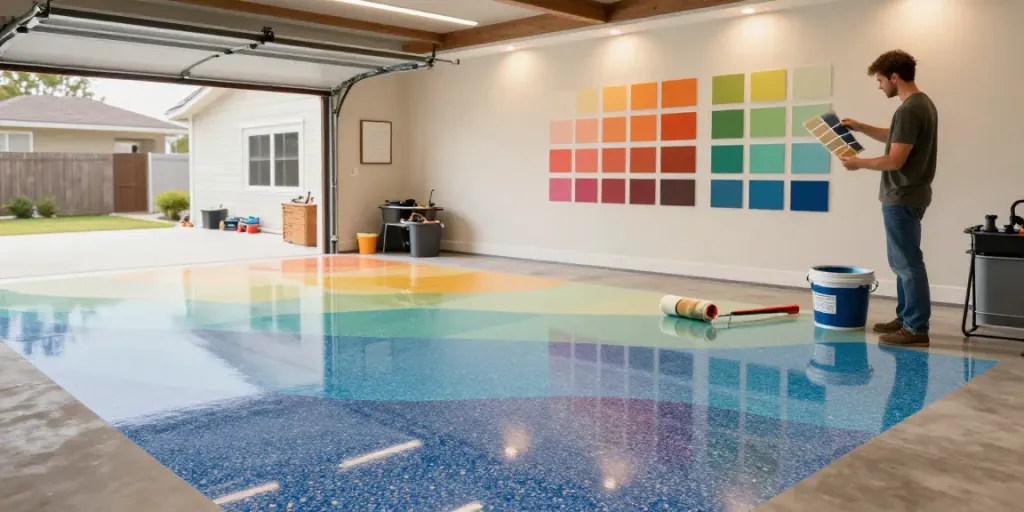
Flake colors come in a variety of options, from vibrant hues to more muted, natural tones. This allows homeowners and business owners to customize their floors according to personal preferences or branding guidelines. A well-chosen flake color can add texture and depth to the flooring, enhancing its visual appeal.
How Color Affects Space Perception
Color choices can profoundly influence how people perceive a space. Light colors tend to make areas appear larger and more open, while darker shades can create a sense of coziness and intimacy. Understanding the psychological effects of different colors is crucial when selecting the right epoxy for your environment.
Popular Trends in 2026 Epoxy Colors
As we move through 2026, several color trends are emerging in epoxy flooring. Earthy tones such as browns and greens are becoming increasingly popular due to their ability to create a calming atmosphere. Additionally, bright accents and metallic finishes are gaining traction as they add a modern touch to traditional spaces.
Application Process of Epoxy Flooring
Understanding the application process is vital for ensuring a successful installation. Whether you choose to hire a professional or undertake a DIY project, proper preparation is key.
Preparing Your Space for Application
Before applying epoxy, the surface must be thoroughly cleaned and repaired. This involves removing old flooring, patches, and any debris. The concrete should be polished and treated to create a rough surface for better adhesion. Proper preparation can significantly influence the longevity and appearance of the final product.
DIY vs. Professional Installation: Pros and Cons
Deciding between DIY and hiring professionals can be challenging. While DIY installation can save money, it requires significant skill and time for a flawless finish. Conversely, professionals have experience, which can lead to a high-quality outcome without the hassle of trial and error.
Safety Measures and VOC-Free Options
Safety should always come first during the application process. It's essential to use VOC-free materials wherever possible, as they provide a safer environment for application without harmful fumes. Many companies now offer eco-friendly epoxy products that do not compromise on quality.
Maintenance and Care for Epoxy Floors
Once your epoxy floor is installed, regular maintenance will ensure it remains in excellent condition for years to come.
Best Practices for Cleaning and Maintaining Epoxy Floors
Cleaning is straightforward with epoxy floors. Regular sweeping or vacuuming to remove dirt and debris, along with mopping with a mild detergent, is often sufficient. Avoid harsh chemicals that could damage the surface.
Dealing with Common Issues and Repairs
Over time, surfaces may experience wear or damage. Common issues include scratches or chips, which can often be repaired by applying a small amount of new epoxy. It's important to address these problems quickly to maintain the floor's integrity.
Longevity and Durability Factors
With proper care, epoxy floors can last upwards of 10 to 20 years. Factors that influence longevity include the quality of the application, type of epoxy used, and level of foot traffic. Investing in high-quality materials and professional installation can extend the life of your flooring significantly.
Future Trends in Epoxy Flooring
As the flooring industry evolves, several trends are beginning to take shape in epoxy products and applications.
Innovative Epoxy Technologies on the Horizon
Future innovations in epoxy technology are expected to enhance durability and application methods. Developments in self-leveling systems and quick-curing formulas will make installations quicker and more efficient.
Eco-Friendly Developments in Flooring Material
There is a clear shift towards sustainable flooring solutions. As environmental concerns grow, more manufacturers are developing eco-friendly products that utilize recycled materials and reduce VOC emissions, catering to the environmentally conscious consumer.
Visual and Functional Design Trends for 2026
The aesthetic of epoxy flooring is also undergoing a transformation. Integrated designs such as decorative patterns and textures are becoming more popular, allowing for greater customization in residential and commercial spaces.
What are the benefits of epoxy flooring for my garage?
Epoxy flooring is particularly beneficial for garages due to its resistance to chemicals, stains, and spills. It provides a durable surface capable of withstanding heavy vehicle traffic while enhancing the visual appeal of what is often an overlooked space.
How do I choose the right epoxy color for my home?
To choose the best color, consider the existing aesthetics of your home, the purpose of the space, and how natural light affects colors throughout the day. Testing samples in the intended area can help visualize the final look.
Can I apply epoxy flooring myself?
While it is possible to apply epoxy flooring as a DIY project, it requires a great deal of preparation, skill, and attention to detail. Mistakes can lead to poor adhesion and a compromised finish, so weigh your options carefully.
What maintenance is required for epoxy floors?
Routine cleaning, monitoring for damage, and promptly addressing any issues are crucial for maintaining your epoxy floors. Regular maintenance will keep your floors looking new for years.
What trends to expect in epoxy flooring in 2026?
Expect a greater focus on sustainable materials and innovative designs. The use of vibrant colors and patterns will continue to rise, along with an increased demand for eco-friendly, VOC-free products.